
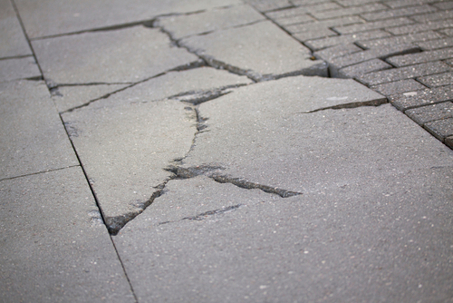
A cracked or uneven sidewalk in New York City might seem like a public issue. For years, it mostly was. The city oversaw the maintenance of sidewalks across the five boroughs, and lawsuits over sidewalk injuries were filed against the city. That changed with a major update to the New York City Administrative Code, and now, in most cases, private property owners are responsible for the condition of sidewalks.
If you were injured in a sidewalk fall in New York City, the first question to determine is who is legally responsible for the condition that caused your fall. Usually, this is the adjacent property owner, and the legal foundation for that responsibility is NYC Administrative Code § 7-210.
At Loscalzo & Loscalzo, P.C., our attorneys have handled personal injury cases in Manhattan and the surrounding areas for more than 50 years. Contact us at (646) 846-4776 for a free consultation. We can review your case and explain your legal options.
What NYC Administrative Code § 7-210 Says
Section 7-210 of the New York City Administrative Code was enacted in 2003. Before its passage, the City of New York was generally responsible for maintaining sidewalks and could be held liable for injuries caused by defective conditions. The 2003 amendment shifted that responsibility, placing the duty to maintain and repair sidewalks on the owners of the property adjacent to the sidewalk.
Under § 7-210, the owner of real property adjacent to a sidewalk is required to maintain that sidewalk in a reasonably safe condition.
This includes:
- Repairing cracks, breaks, and raised or uneven flags – Physical defects in the sidewalk surface that create a tripping hazard fall within the property owner's maintenance obligation.
- Removing snow, ice, and other hazards – The adjacent property owner is responsible for clearing the sidewalk within a reasonable time after snowfall or the formation of ice.
- Addressing tree root damage – When tree roots from street trees lift or crack sidewalk flags, the property owner adjacent to the damage is typically responsible for repairs.
The law holds property owners responsible for injuries caused by failure to keep sidewalks in a reasonably safe condition. This means that if a defective sidewalk next to private property led to your fall, your claim is usually against the property owner, not the city.
Exceptions: When the City Remains Responsible
Section 7-210 applies broadly, but in specific situations, the City of New York retains liability for sidewalk conditions.
These exceptions include:
- One- to three-family residential properties owner-occupied – The owners of small residential buildings who live in the property are exempt from the liability shift under § 7-210. In those cases, the city may still bear responsibility for injuries caused by sidewalk defects adjacent to the property.
- City-owned property – Sidewalks adjacent to property owned by the City of New York remain the city's responsibility.
- Tree pits maintained by the city – In some cases involving tree damage to sidewalks, nuanced questions arise about whether the city or the property owner bears responsibility, depending on the tree's maintenance history and the specific circumstances of the defect.
These exceptions are limited. Most sidewalk injury claims in New York City involve commercial properties, larger residential buildings, or non-owner-occupied properties, all of which are covered under § 7-210's liability framework.
Filing a Claim Against a Private Property Owner vs. the City
The procedural requirements for pursuing a sidewalk injury claim differ depending on who is responsible.
Claims against a private property owner follow the standard personal injury process. You must prove that the property owner had notice of the defect—either actual notice, meaning they were informed of it, or constructive notice, meaning the defect was visible and present long enough that a reasonable property owner would have discovered and repaired it—and that the defect caused your injuries.
Claims against the City of New York, when applicable, involve additional procedural requirements. Before you can file a lawsuit against the city, you must file a Notice of Claim within 90 days of the date of your injury. Missing that deadline can limit your ability to pursue the city. If your fall involved a condition adjacent to city-owned property or a one- to three-family owner-occupied home, time matters significantly.
Because liability depends heavily on property classification and ownership, identifying the responsible party early is a critical step in any sidewalk injury case.
What Establishes a Valid Sidewalk Defect Claim
Not every trip on an uneven sidewalk leads to a successful claim. New York courts use specific standards to decide what counts as an actionable defect. A small, trivial imperfection might not be enough. The courts look at factors such as the depth and width of the crack or elevation difference, the surrounding conditions, and whether the defect was visible and could have been avoided.
Documenting the defect right after your fall is crucial because conditions can change. Property owners sometimes make repairs soon after an incident happens. Photos, witness statements, and medical records collected close to the time of the accident strengthen your claim.
At Loscalzo & Loscalzo, P.C., our attorneys carefully evaluate each case. We assess the sidewalk's physical condition, the property owner's maintenance history, and whether any prior complaints or 311 reports about the defect exist. Because one attorney handles each case from start to finish, clients have a consistent point of contact who understands the specific details of what happened.
What to Do If You Were Injured on a NYC Sidewalk
Sidewalk injury claims in New York City involve property-specific liability rules, strict procedural deadlines, and evidentiary standards that require prompt action. The 2003 shift under § 7-210 changed who you pursue in most cases, but it did not simplify the process of proving that claim.
Establishing the property owner's notice of the defect, documenting the conditions before they change, and meeting filing deadlines are all critical steps that require early legal involvement.
Whether the responsible party is a private property owner or, in limited circumstances, the city itself, the path to recovery relies on the same basics: documented evidence, clear causation, and a thorough understanding of which legal standards apply to your specific situation.
If you were injured in a sidewalk fall, contact our office at (646) 846-4776. We offer free initial consultations and can meet you at home or at the hospital when needed.